✓ Allowed
Play into Your Own Wall After the Bounce
Once the ball has bounced on the floor, you may play it into your own glass wall and return it from there. This classic wall shot opens up many tactical possibilities.
Know-how & Rules
Learn the essential padel rules in just a few minutes. From serving and scoring to using the glass walls correctly – here is everything you need for the perfect start.
The Sport
Padel combines elements of tennis and squash and is one of the fastest-growing sports in the world. It is played mainly as doubles on a smaller court surrounded by glass and mesh walls that are actively used during play.
The glass walls extend rallies and create tactical opportunities that do not exist in tennis. The result is varied, exciting play that is easy for beginners to enjoy while still challenging experienced players.
The Court
A padel court is more compact than a tennis court and clearly divided by service boxes, a centre line, and surrounding glass and mesh walls. This makes the game fast, dynamic, and highly team-oriented.
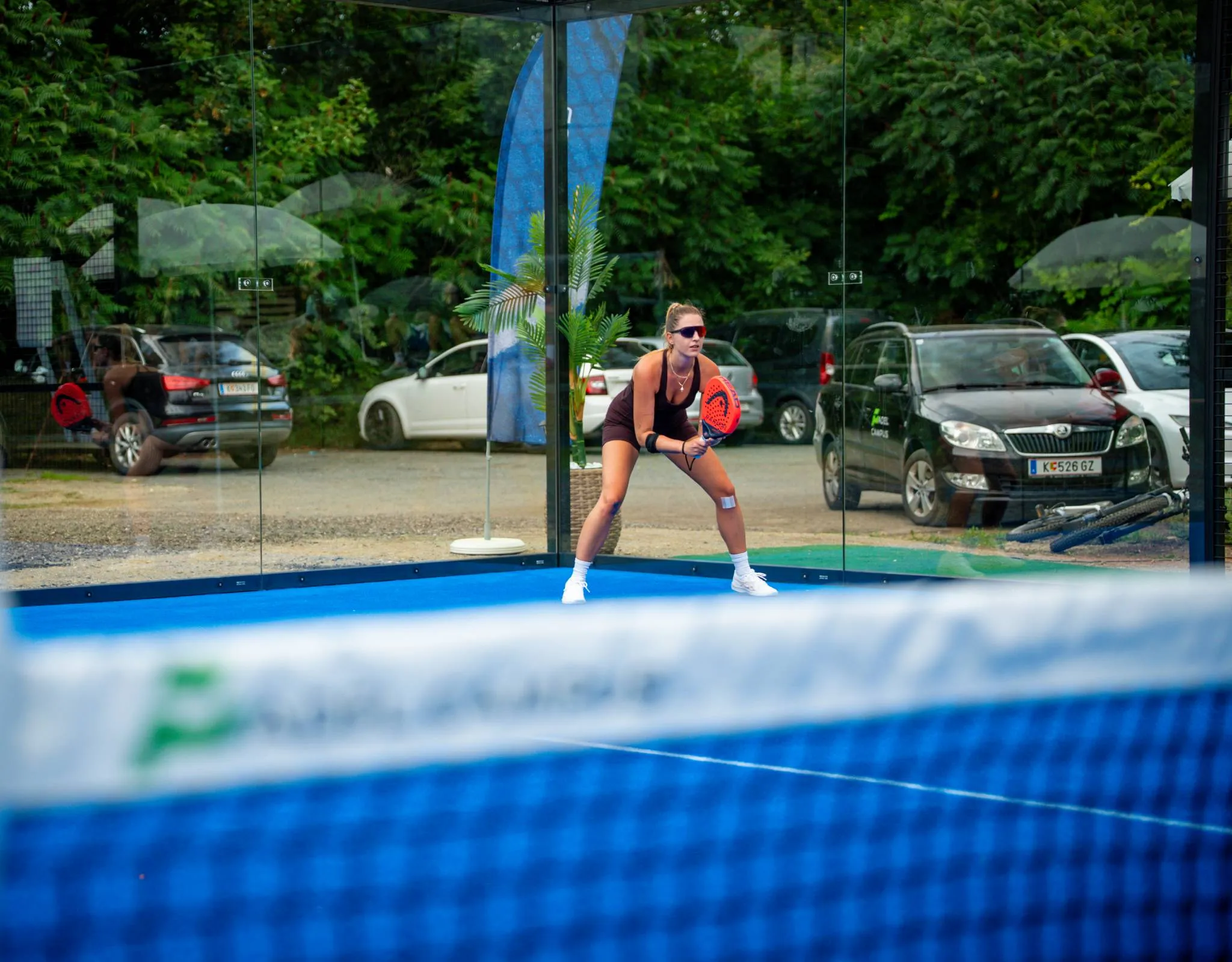
The court is surrounded by glass walls and metal mesh. After the ball bounces, both elements can become part of the rally and create additional tactical opportunities.
Rules
The padel serve is played underhand after the ball has bounced once. Control and placement matter more than maximum power.
The Heart of the Game
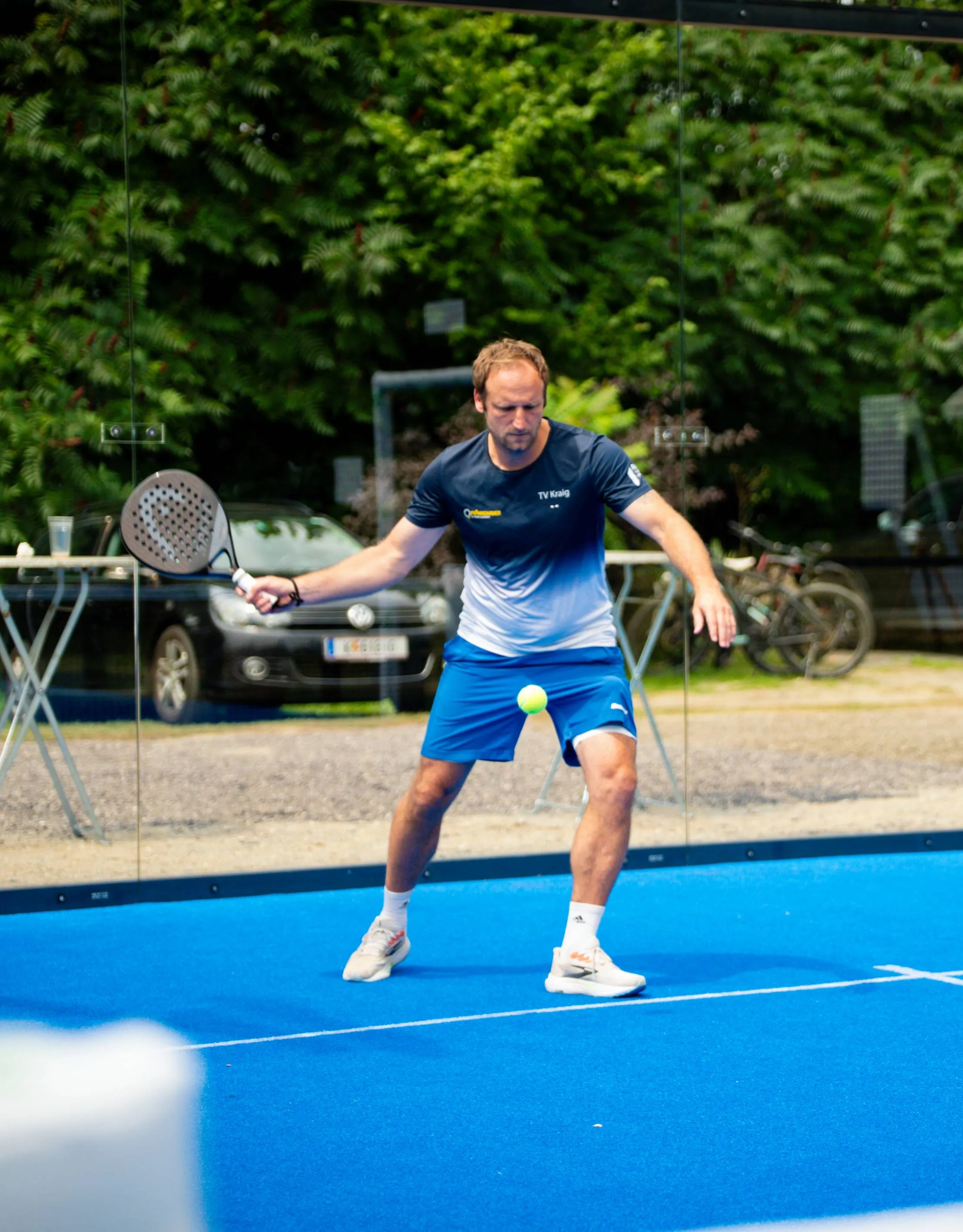
The walls are what make padel unique. Reading and using them correctly gives you more time, greater control, and new tactical options.
✓ Allowed
Once the ball has bounced on the floor, you may play it into your own glass wall and return it from there. This classic wall shot opens up many tactical possibilities.
✓ Allowed
After the ball has bounced on the floor, it may touch several walls in succession as long as it does not bounce on the floor a second time.
✓ Allowed
On courts designed for it, a ball may leave the court after bouncing and be returned from outside. This special play is known as an X3 or X4 ball.
✓ Allowed
When your opponent plays a lob, the ball may bounce, hit the glass wall, and then be returned. This is an important part of defending in padel.
✗ Not Allowed
If the ball hits the opponent's glass or mesh before bouncing on the floor, the point is lost. The ball must always hit the floor first.
✗ Not Allowed
The ball may bounce only once on your side of the court. After the second bounce, the point is lost.
Rules
You win the point as soon as the opposing team makes one of the following errors:
Match Structure
Traditional padel scoring is the same as in tennis. Depending on the competition, formats such as Golden Point or a Match Tie-Break may be used.
At 40–40 (deuce), competitions are played either with advantage scoring or with Golden Point. With Golden Point, the next rally decides the game.
A set is won by the first team to reach 6 games with a lead of at least 2 games. Possible scores include 6–3, 6–4, or 7–5.
At 6–6, a tie-break to 7 points is played, with a 2-point lead required.
Matches are played as best of three sets. At 1–1 in sets, a Match Tie-Break to 10 points is often played instead of a full third set.
During the tie-break, the serve changes after every 2 points.
Tactics
Padel is a team sport. Teams that control the net together, move in sync, and communicate clearly gain a decisive advantage – regardless of their technical level.
Both players position themselves together around 2–3 metres from the net. From here, they can play controlled volleys and build pressure. The aim is to hold the net position for as long as possible.
When the opposing team takes the net, move back together towards the baseline. Use the glass walls actively, stay patient, and look for an opportunity to regain the net with a controlled lob.
Few racket sports require as much coordination as padel. Short calls such as "Mine", "Yours", or "Both at the net" prevent misunderstandings and help maintain rhythm.
Comparison
Many padel beginners come from tennis or other ball sports. Here are the most important differences at a glance.
| Feature | Padel | Tennis |
|---|---|---|
| Serve | Underhand – after one bounce | Overhead – powerful upward motion |
| Walls | Glass walls and mesh are part of the game | No walls are used |
| Format | Singles (rare, on a single court) and doubles | Singles and doubles |
| Court size | 200 m² | Approx. 196 m² (singles) and 260 m² (doubles) |
| Racket | Solid perforated face, shorter frame | Strung, longer frame |
| Rallies | Longer rallies | Often shorter and more serve-dominated |
| Learning curve | Easy to learn, difficult to master | More technically demanding to start |
| Teamwork | Central – communication is essential | Individual performance in singles |
For Beginners
The walls are your friend, not your enemy. Balls that appear lost can often still be returned after rebounding from the glass. Practise this early – it makes a major difference.
On the smaller court, power alone is rarely enough. Placement and control are decisive. Play calmly and precisely instead of hitting every ball at maximum force.
Forward, backward, and sideways – always move together with your partner. If a gap opens between you, your opponents will use it immediately.
Short calls such as "Mine" or "Yours" prevent confusion. Do not be afraid to talk to each other – communication is encouraged in padel and decides many points.
Almost every beginner underestimates the walls. Let the ball bounce, watch its path, and give yourself time. With practice, the glass walls will become one of your biggest advantages.
Ready?
You know the most important rules. Next up: book a court or find playing partners.